

Summary
When a global chemical company reached a safety plateau, leaders discovered that employees weren’t consistently giving and receiving safety feedback when it mattered most. While a new training program provided the skills, the organization needed a way to make those conversations feel more comfortable and natural in everyday work.
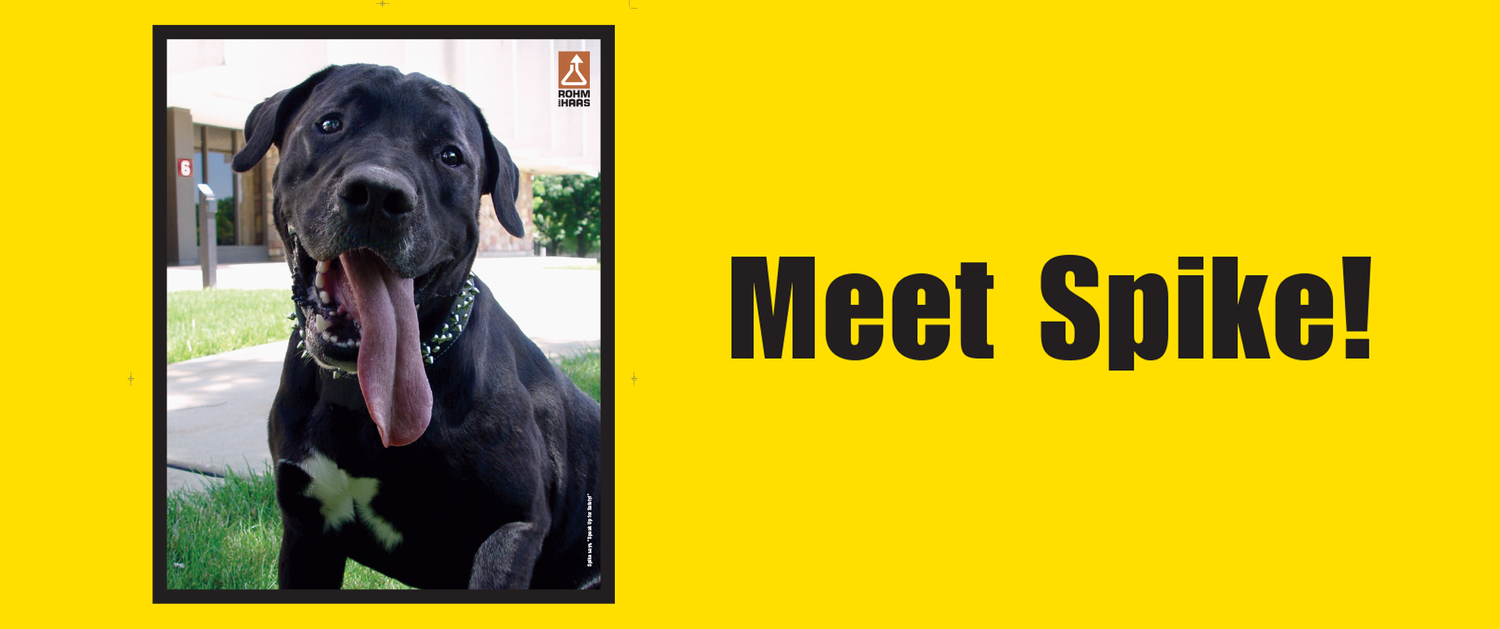
That’s where Spike the Safety Dog came in. Friendly, approachable, and memorable, Spike became the face of an internal campaign that encouraged open safety dialogue through buttons, posters, newsletters, and live events. The result was stronger employee engagement, more frequent safety conversations, and the company’s best safety performance in over a decade.
The Challenge
Safety feedback is critical—but it’s not always easy.
Even in a strong safety culture, employees can hesitate in the moment, unsure how to raise a concern or how it will be received. That hesitation was enough to stall progress, keeping the organization from moving beyond its plateau.
The safety team was rolling out new training to equip employees with the right skills and tools.
To drive real change, they turned to Boshā to ensure those new skills showed up in everyday moments.
Our Strategy
Spike came from a simple insight: some things seem intimidating—until you actually experience them.
Inspired by a Boshā team member’s large but famously friendly dog, we created Spike the Safety Dog as a symbol of that shift. Sometimes it’s not about eliminating risk; it’s about building the confidence to approach it the right way.
That same shift is what safety feedback needed. Spike gave people a way to see those conversations differently—and start them more easily.
Bringing Spike to Life
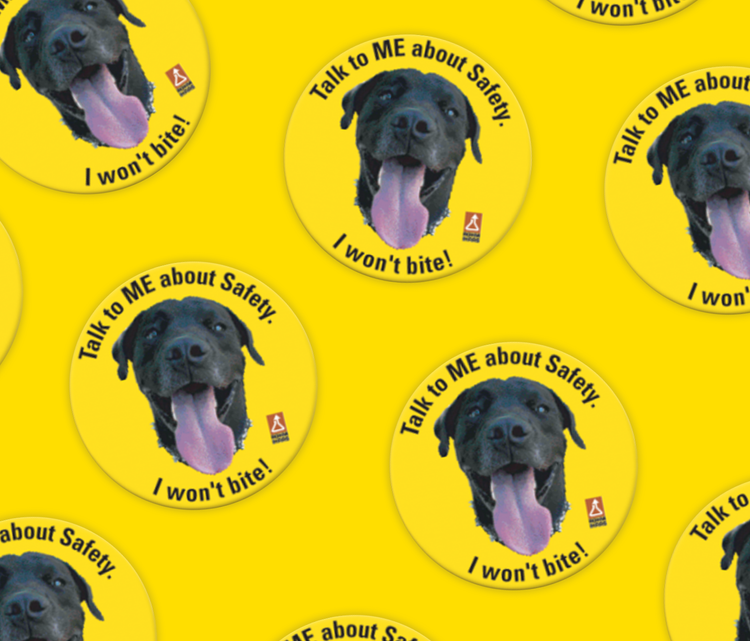
An easy way to start a conversation
Buttons featuring Spike and the message “Talk to me about safety. I promise I won’t bite” quickly became a team favorite. Employees wore them proudly, turning what could be an awkward moment into a natural invitation and icebreaker for a conversation.
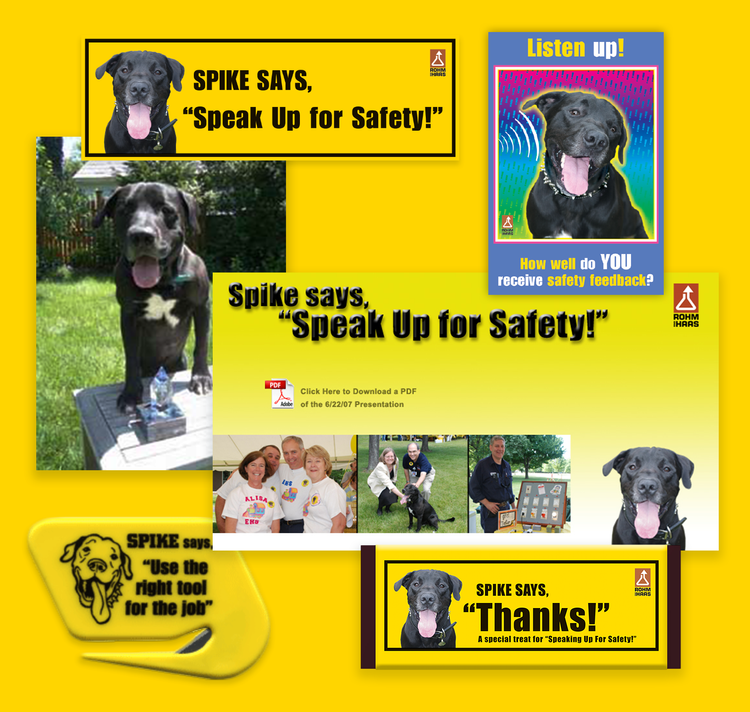
Safety messaging people actually noticed
Spike appeared across a series of posters covering everything from housekeeping to seasonal safety tips. The tone was engaging and approachable, helping reinforce key behaviors without feeling heavy-handed.
Keeping the momentum going
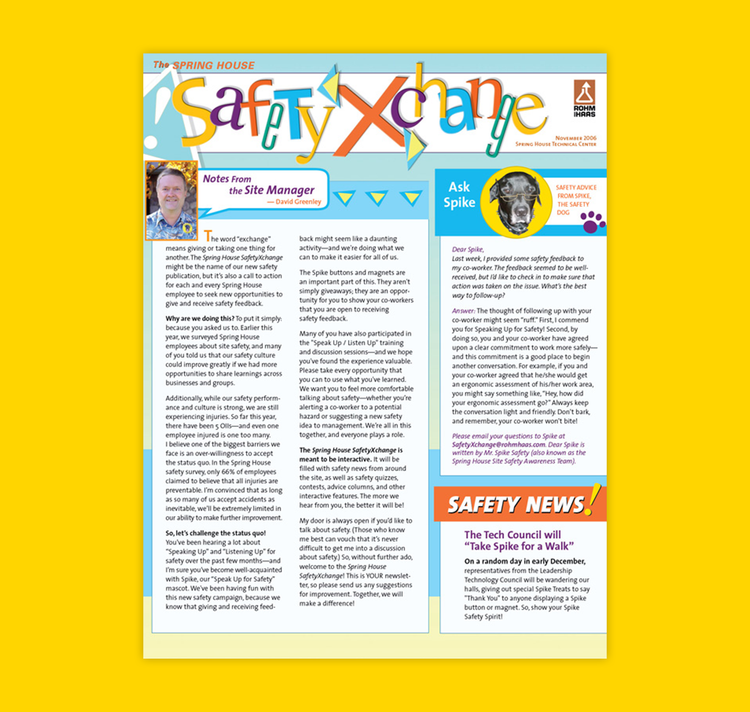
“Spike” newsletters shared safety wins, practical tips, and stories from across the company, making safety visible and relevant beyond a single campaign moment.
From idea to shared experience
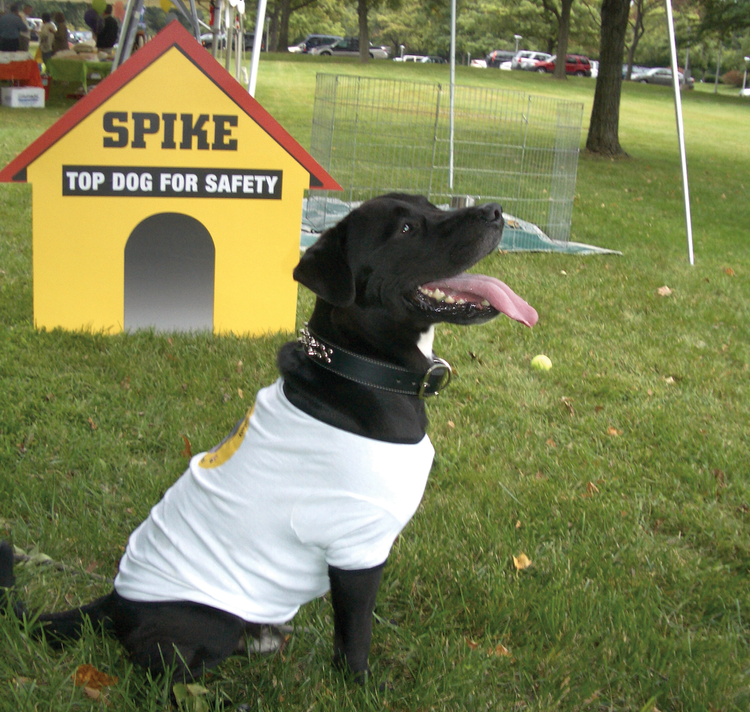
The campaign culminated in a large-scale safety sharing event, where Spike made a special appearance. The energy and participation were strong enough that the concept expanded into cross-site safety sharing the following year.
The Impact
Spike did more than create awareness; he changed behavior. Employees became more comfortable speaking up, safety feedback became more frequent, and conversations that once felt awkward became part of everyday work.
The results were clear: the company achieved its strongest safety performance in over ten years.
The campaign also earned external recognition with a Pepperpot Award from the Philadephia chapter of the Public Relations Society of America (PRSA). Among a field of well-known brands and organizations, one unexpected name kept coming up in conversation: Spike.
Proof that a simple idea—done right—can stand out anywhere.
Key Takeaways
This case study shows how Boshā helps organizations turn insight into action:
- Behavior change happens when barriers feel smaller—and more human (or canine in this case!)
- Creative ideas can unlock engagement where training alone cannot
- When people feel comfortable speaking up, performance follows
Spike may have been unexpected.
But his impact wasn’t.
Case Studies
-

From Confusion to Clarity: Building a Knowledge Center for a Pharma Team
By Christopher Ross
-

Digitalizing Project Management For a Global Pharmaceutical Leader
By Christopher Ross