



Summary
Boshā partnered with Sisters of Mercy to design and build a centralized digital asset repository that supports their storytelling and outreach. Built as a custom SharePoint solution, the platform provides a visually engaging, easy-to-search library and intuitive experience that replaces scattered folders and enables the organization to share its mission more effectively.
The Challenge
Sisters of Mercy had files, images, and other resources spread across multiple disconnected platforms and applications. When leadership decided to consolidate into SharePoint as part of a broader digital transformation, the scope came into focus: more than 21,000 images needed to be migrated, organized, and made easily accessible.
An important requirement was that the site serve a diverse user base, including internal staff, affiliated external users, and others with varying levels of access. Many users are not native technology users, making ease of use and intuitive design essential.
Given both the technical requirements and user experience needs, the organization also wanted the platform to reflect their brand identity, not the generic, templated look that SharePoint delivers out of the box. Additionally, for a global organization with users in areas of limited bandwidth, image loading performance was a challenge that had to be addressed from the start.
Our Strategy
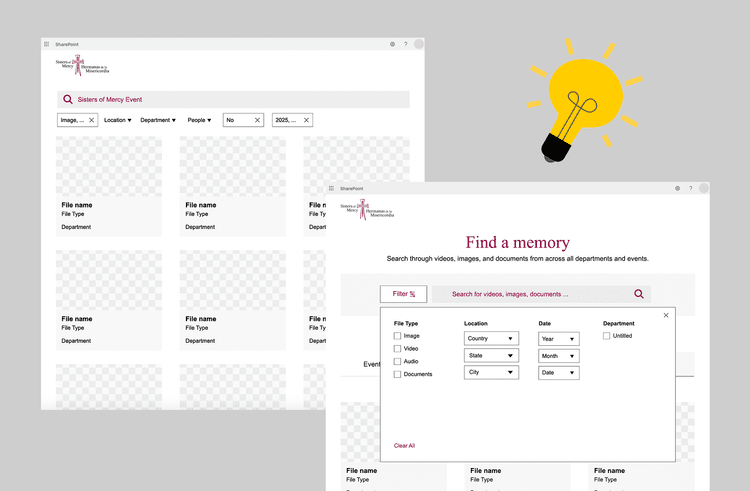
Discovery: Alignment, early thinking, and prototyping
Boshā began this work with a structured discovery phase designed to ensure alignment and define how the platform would be used. During this phase, the team:
- Defined audience types and access permissions
- Aligned on goals and success criteria
- Established the overall structure and usage model for the site
Discovery also extended beyond documentation. The team began shaping the experience early:
- Developed initial user interface and user experience mockups
- Explored how pages would look and function
- Created early prototypes including an AI-generated mockup
This approach ensured the system was grounded in real user needs and expectations from the outset.
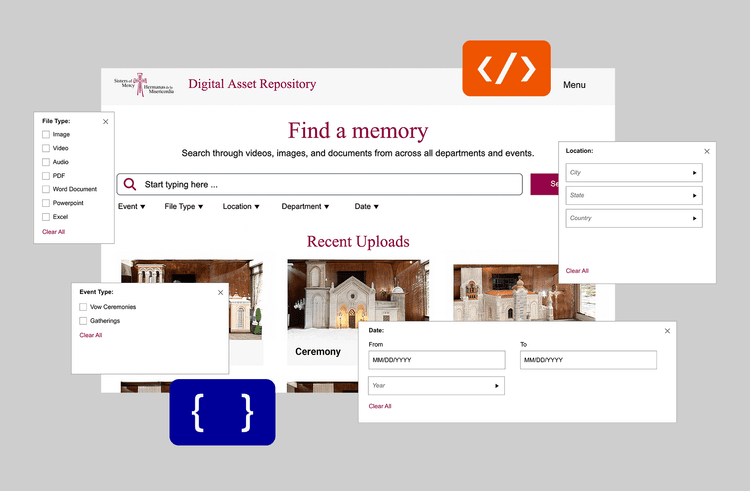
Design: Shaping the user experience
Building on discovery, the team translated requirements into a clear and intuitive user experience. Key design priorities included:
- Larger, more inclusive navigation to support accessibility
- Moving away from SharePoint’s default folder structure
- A more visual, branded front-end experience
The team also defined the metadata architecture needed to make assets searchable and filterable by topic, location, event type, and date. Tagging structures were developed collaboratively to reflect how users naturally think and search, not just how files had historically been stored.
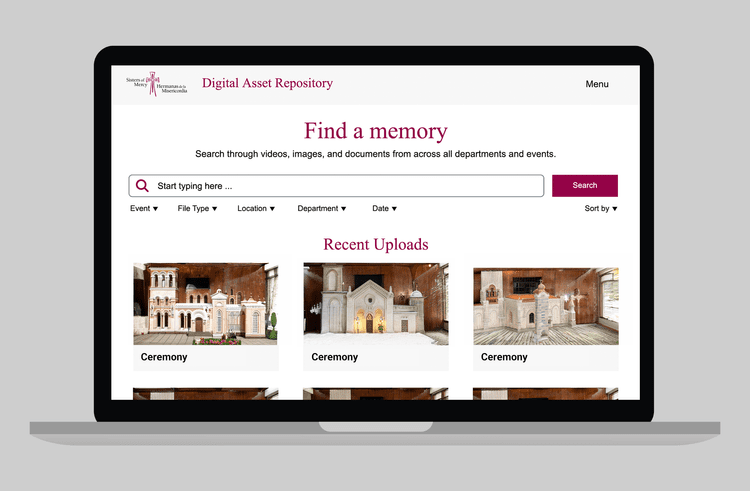
Development: Building, testing, and refining
Development was guided by the defined scope and requirements, with a focus on iteration and flexibility. The team:
- Built the platform based on agreed-upon requirements
- Conducted iterative demos and feedback cycles
- Refined functionality throughout development
- Took a practical and flexible approach to evolving needs
This included:
- Removing workflows identified in discovery that were no longer necessary
- Adjusting default behaviors based on user preferences
- Refining solutions when better options emerged during development
The final platform features robust search and filtering, asset downloads, slideshow functionality, and tagging capabilities that allow users to add missing metadata such as names, locations, and event details. Training was also provided to ensure successful adoption.
The Impact
Since its soft launch, the platform has driven measurable engagement: users are spending an average of 15 minutes on the site, and it has already recorded 1,000 user views, an increase for the client. Stakeholders across the organization responded positively, noting that the new platform met both their functional needs and their expectations for a polished, branded experience.
Sisters of Mercy now has a centralized, scalable digital home for its assets that supports brand consistency, encourages discovery, and is built to grow alongside the organization's evolving needs.
- Average user engagement time reached 15 minutes per session
- Platform recorded 1,000 user views shortly after soft launch
- Stakeholders reported improved usability and a more polished branded experience
- Created a centralized, scalable system for managing and discovering digital assets
- Improved consistency in how branded content is accessed and shared across the organization
Key Takeaways
This case study demonstrates how Boshā creates solutions to meet clients’ unique needs.
- SharePoint-based solution requiring no additional licensing
- Visual gallery providing easy search and browsing
- Filterable asset library using structured metadata
- Simplified navigation designed for non-technical users
Case Studies
-

From Confusion to Clarity: Building a Knowledge Center for a Pharma Team
By Christopher Ross
-

Digitalizing Project Management For a Global Pharmaceutical Leader
By Christopher Ross